Search This Blog

Loading...

Tuesday, April 30, 2013

How to Make Friends and Infulence People in the New Century - Another Look!

By Hector E. Cisneros


The last 25 years have ushered in sweeping changes in our society. 

My Cyber Social Map
My Cyber Social Map (Photo credit: frankdasilva)
Personal relationships have been devalued to some extent by the introduction of social networks. We have gone from a society of people having a face-to-face relationship to a society that spends a large amount of time in virtual relationships. We have many cyber friends we don’t even know. Younger people spend more time text-ting each other than actually speak to each other. Often they are even in the same room (or in the same car).  Facebook is now running commercials showing that people would rather be on their Facebook phones, reading their news feed, than interacting with their families at the dinner table. The fact is, we live in an internet-enabled world, and all of us need to take responsibility for building real relations based on trust, mutual benefits, proven performance and credible results . So, in this article I am revisiting and update my view on what it takes to build strong relationships in business and in life and how to make friends and influence people in the 21st century.

Take One!

YIP Day 305 - Dale Carnegie
YIP Day 305 - Dale Carnegie (Photo credit: Auntie P)
A couple of years ago I wrote an article called “How to win Friends and Influence People in the 21st Century. In that article I emphasized the law of reciprocity. The law that states what goes around comes around.  That means if you help others, they will in turn help you back. I clearly stated in that article that this was my magic formula for growing my business, my reputation and for building trust amongst my customers. I also stated that I was providing others with testimonial letters, as well as referrals and recommendations long before the advent of social networks. Word of mouth marketing is built on your reputation. It depends on building trust and credibility. More importantly, it relies on the cultivation of trusted referral partners and loyal customers to sing your praises and to spread your message to others.

Electronic Word of Mouth

Word of Mouth (TV series)
Word of Mouth (TV series) (Photo credit: Wikipedia)
Social networking is an electronic form of word of mouth marketing. It allows your referral partners and happy customers to sing your praises to a world audience, an audience that can spread that positive (or negative) message quickly and to a very large number of people, far beyond your customer base.

In my previous article I also mentioned that my social networks have built-in functions to pass along recommendations and testimonials. LinkedIn, Ecademy and FourSquare were the examples I gave. Since that writing LinkedIn has added an additional endorsement function where you can just click on a person’s skill to recommend them. However, I still prefer that you write a genuine testimonial letter and upload it.  This will carry more weight than just clicking on someone's skill set as an endorsement. 

A Rule By Any Other Name.

Rules Don't Stop
Rules Don't Stop (Photo credit: Wikipedia)
As a general rule, the more work you do to help someone, the greater the value and weight your efforts carry, (i.e.…the better the referral, testimonial or recommendation).  Don’t limit your recommendations to just one social network. Post your recommendations on as many networks as possible. I often post my recommendations on the top five social networks. This includes Facebook, YouTube, Google+, Twitter and LinkedIn. But don’t stop there.  Posting to other networks like Merchant Circle, AnglesList, Google Local and YollowBook also helps. I also like making recommendations on blogs and websites, if it has the facility to allow you to rate them there.

YouTube Can Be your Best Weapon.

youtube_logo
youtube_logo (Photo credit: leti_valde94)
A quick note about YouTube; many people don’t think of YouTube as a social network, however it has all the features of a true social network. You subscribe to it. You can follow other accounts, build a following, make and receive recommendations and leave comments on a person’s posts. More importantly you can create a video testimonial for the person you’re trying to help. In today’s world, nothing is better than a video testimonial from a happy customer. Commercials are full of actors faking their endorsement.  But a customer’s eyes rarely lie. Today, videos are the king of testimonials. More people would rather watch a short video that read anything. This is especially true of your testimonials. Unscripted, spoken from the heart words of praise are priceless marketing weapons without equal. Do everything in your power to help your customers provide this valuable service for you and your company. This can include providing incentive for the completion of a recommendation etc.… However, the law of reciprocity only works if the testimonial that is given is genuine. You must earn their recommendation by providing them with good service or a valued product.

Visuals are Worth a Thousand Words.

Worth 1000 - 2nd Edition
Worth 1000 - 2nd Edition (Photo credit: spcbrass)
Many social networks allow you to upload pictures and or videos. Note that written testimonials, referrals and recommendations can be saved as PDF and JPG files, essentially turning them into pictures and downloadable documents. This is another way you can upload testimonials to social networks like Twitter, Google + and Facebook. Don’t forget to upload your video testimonial to these channels also. This includes other rating sites like Google Maps and Google local. As a matter of fact many “Local Directories” provide a place for you to upload pictures and videos. Use these to your advantage.  I would be willing to bet if you do, you will be one of the few that use this strategy and it will give you a big advantage.

Do What Smart Companies Do!
Help Desk
Help Desk (Photo credit: Michael @ NW Lens)
Smart companies today are using social networks as a new kind of help desk and or customer service venue. They can watch for customer posted complaints, then connect with these disgruntled customers, and head off problems before they become big PR issues.

Come Get your New Tools.
Today there are also lots of tools that make it easier to post your recommendations and testimonials. These tools provide leverage so that you can post to multiple networks simultaneously. You can even schedule post asking people to read your testimonials’ and recommendations. There is no rule that says you can’t post this type of request more than once. Just don’t do it too often or you risk alienating your following. My favorite tool is Hootsuite and it is free at Hootsuite.com.

Don't Spoil the Post!
Avoid the Noid
Avoid the Noid (Photo credit: Wikipedia)
Make sure that you don’t spoil your efforts by providing poorly written testimonials or recommendations. Your spelling and grammar must be perfect.  Double check the spelling of the company or the business name. Nothing can spoil a great testimonial, referral or review like spelling and grammar errors, (especially if you get the name wrong)!

What Not to Do!
So far I have told you a lot of things you should do, but I haven’t spent much time telling you what you need to avoid. Make sure you maintain a positive attitude. Being positive draws people to you. This is transferred into your writing and show up in your post. Avoid negative expressions and conversations. They do not help you in your quest to grow your business. Also avoid cursing, crass and salacious language. This kind of language never makes you look professional.  Don’t get into arguments with people on social networks. These networks are public and you don’t want to air squabbles and dirty laundry in public.

Other things I would avoid is trying to use tricks or techniques like mirroring and matching or NLP.  These can be useful when face to face but they really lose something when translated into writing. Plus if a person figures you are trying to manipulate them your relationship is all but lost. It's important to be yourself. Especially your better self. Leave your ego at the door when trying to help others. 

The Reciprocity Experiment
I have spent the last 20 years of my business life following the law of reciprocity and it has served me well. I have dozens of recommendations and a clean online reputation. I keep my reputation clean, not by tricks or hiding bad news with massive PR campaign that pushes bad news off page one. Instead I follow a simple rule, "do what is right"! I concentrate on helping my cusotmers from there point of view. If I make a mistake, I go out of my way to make it right. Doing the right thing never hurts your reputation. And helping others first just amplifies your status.
infulence of friction on a magnetic pendulum.
infulence of friction on a magnetic pendulum. (Photo credit: Wikipedia)

If you don’t believe me, try this experiment. Pick a number of referral partners, (I chose 30 when I did this experiment) and write testimonials for them. Post them to the top five social networks, (or whichever ones you’re on) and then let them know that you provided this service for them. Ask them if they could reciprocate by doing the same for you. You will find that your reciprocity rate will be between 30 and 50% most of the time. If you do this experiment three or four times you will have helped a lot of people and in turn helped yourself by gathering a handsome number of recommendations to boot. Keep in mind that this will only work if you have built trust and credibility with others. If they don’t know, like and trust you, asking them for a recommendation is not going fly either.

A Few Last Words.

Word Gets Around
Word Gets Around (Photo credit: Wikipedia)
A few last words to remember. Today, your reputation (individual and business) extends far beyond the boundaries of your business. Anyone can research your reputation and they believe what they read and view. Social media has become the great equalizer. It some cases, it has also become the spoiler. This is especially true if a competitor is trying to soil your reputation. The viral power of social networks allows a reputation to be passed around the world quickly (good or bad). It behoves you to make disgruntled customers satisfied. Making things right is the best way to turn a bad situation into a positive recommendation.

In this article I have covered the law of reciprocity and how it allows you to win friends and influence people in the 21st century. I have discussed how you can use this principle on a variety of social media including the top five social networks and others like Angieslist, Merchant Circle and Google Local. I have included suggestions on how to leverage your time and given insight to using YouTube as a social network and testimonial tool. If you have enjoyed this article pass it on to your friends. If you have other ideas, thoughts or comments on this subject share them with our readers in the comment section.  If I or my company can be of any service, call, email or write us and we will contact you personally.

That’s my opinion.  I look forward to hearing yours.

Hector Cisneros is COO and social media director for WSquared Media Group. Connect with him  on TwitterFacebookGoogle+, and YouTube. W Squared Media Group is based in Jacksonville, FL. He is also co-host of Blog Talk Radio’s “Working the Web to Win,” where he and Carl make Working the Web to Win simple for every business. Hector is a syndicated writer and published author of two books, including 60 Seconds to success and Internet Marketing for the 21st Centurywhich you can get free by clicking on the link.

 Related articles
Enhanced by Zemanta

Tuesday, August 28, 2012

Making Sense of Internet Marketing

By Hector Cisneros
Have you ever entered a conversation about marketing and became instantly perplexed by the terminology being bantered around? Did you get confused trying to follow the how, what, when, and where in the marketing plan? At the end of the conversation, did it seem like an epic tale spoken in Greek? If this is where you are with regards to internet marketing then this article is for you. This article is part of a series that is designed to cover basic terminology and actionable elements, as well as give specific steps for developing your own marketing plan.

Part I: The basis of search engine marketing and social media.

This series will take you through all the internet marketing venues including; Landing page layout, Search Engine Optimization, Search Engine Marketing, Blog/Article Marketing, Pay Per click Marketing, Email Marketing and Direct Mail Touch Marketing. It is meant for a business person new to internet marketing, but the techniques covered will work as well for the seasoned veteran. The series as a whole will tie all the elements together and provide you with a plan for internet marketing success. Stay tuned and tighten your belt because this will be one fun and productive ride into the world of internet marketing.

Marketing can be rendered in two ways

To start off, marketing can be implemented as a one-off advertising event or as a campaign. As a general rule, campaigns are longer term commitments that need to be planned out. By nature, campaigns in general produce far better results than one-off advertising purchases.
Campaigns are broken into two types: Strategic and tactical
Strategic refers to all the long term aspects of your overall campaign goals. They should align with your company’s unique selling propositions (USP), your mission statement and the principles your company follows. Tactical refers to shorter term goals, along with specific elements used as part of a daily, weekly, monthly or quarterly campaign.

For example; You may have a long term objective to land 1,200 new monthly subscribers of your product/service in one year. Your tactical plan will include specific marketing elements (different type of advertising like Pay per click, Blogging, Social Media Contest) that will run on either a daily, weekly, monthly, quarterly or on an annual basis.

Annual agreement should always be part of a cohesive strategic campaign. Examples of these types of programs would be a Social Media Development campaign, (i.e. Growth to say 1,200 fans) or Search Engine page Ranking campaign, (i.e. Reach a page one position). These two items generally take some time to achieve. Trying to engage in this type of marketing as a short term proposition usually doesn’t work.

From a digital marketing perspective, organic efforts are usually set up as part of a long term campaign. For the most part your individual elements will be set up on a monthly, quarterly, semiannual, or annual basis, but the contracts themselves are usually annual. This is due to the fact that reaching long term goals usually take longer to achieve. An exception to this is pay per click which usually runs until your money runs out. We will talk more about this later.

Some of the marketing elements you chose may not seem to change much. For example; Social network development or Organic Search Engine marketing efforts are usually annual contracts. You would normally pay a monthly fee to a company that is providing some guaranteed growth or rank position, not running ads. However, if the companies you contract with are worth their salt, they will constantly change what they are doing in order to meet the growth targets or reach your page rank goals. Contrast this to individual pay per click ads running on Google or Facebook and you will notice you are managing (or having someone manage) specific tactical ads that are usually geared to taking advantage of event driven circumstances (seasonal or other promotion etc…). Pay per click ads usually have a shorter in duration play, have a finite run and a finite budget that may or may not last a year.

The promise of Pay Per Click

Now let’s define a few more terms that are bantered about. We’ll start with Pay Per click.  PPC as it is often referred to, means that you are running specific ads on one of the search engines, directories or social media sites. Typically Google, Yahoo, Bing, Facebook or LinkedIn. Each time someone clicks on your ad you are charged a fee based on the highest bid for the keyword. Winning the bid will trigger the appearance of your ad in a specific location. This will differ between the specific medium you choose (i.e. Google Search, Facebook etc.…) But with all of them the person that bids the most gets the best placement.

In many contracts some services charge for each view whether a person clicks on the ad or not, (aka pay per view). Generally you are charged per thousand views/exposures. In most cases PPC is better than PPV because you only pay for an actionable event. A click through to your site.
Search Engines Vs. Social Media

Before we get too far into PPC, let's define Search Engines and Social Media a bit more. Search mediums fall into two categories, search engines and directory listings. The primary search engines are Google (which has 81% of all search traffic), Yahoo, Bing and a few others. Secondary Search mediums include directories like Merchant Circle, City Search, Search Local and thousands of others. Today the line is becoming a little blurred as Social Networks have gotten so big that they also provide search services. Facebook has 900 million subscribers. Twitter, LinkedIn, YouTube and Google+ exceed a billion subscribers.

All social networks provide some form of search function and the top five also provide PPC, PPV and sponsored ads. A search on a Social net is different from a Search Engine search in that it’s targeting is based on a subscriber profile (which can include geographic, demographic and psycho graphic information listed in a person's profile) as opposed to keywords.
Social Networks defined

Now let’s define social media or more precisely social networks. A social network is a free subscription service that individuals and businesses join for their own reasons. Many individuals join to connect with family, friends and coworkers. Others have joined because it’s the new “in” thing to do. Many businesses join because they want to connect with prospects and clients to sell and support the products/services they offer.

As a rule, people join social networks for one of four reasons; to connect with others, find useful information, be entertained or learn interesting facts. Another important rule to remember is that nobody joins a social network to be sold to. Businesses on the other hand join because they want to sell and connect with prospects and clients! They want to sell to the millions of subscribers on these social nets. But rest assured that if you try a direct sales approach you will lose many of your fans.
Selling on social nets is done by word of mouth, testimonials, recommendations’ and a little bribery. Yes, you can run PPC and story ads and yes people will buy from those ads, but that’s not their primary reason for being there. If you ONLY run commercials, your fans will be turned off and may block you. The best way to sell anything on a social network is to let your happy customers become your raving fans. Let them tell your story and reward them for promoting your products or services. In my article called the “six cardinal rules for success in social media marketing”, I lay out six guiding principles worth following. If you're interested check it out. It will provide some useful insight into an approach that works.

Is Organic better than Paid?

Another term related to Search Engine and Social Media Marketing is the term Organic. Organic in search engine marketing refers to a company’s listing position that was reached based on that search engines criteria, (verses a paid position). For example; Google’s primary determining factor for organic position is being “Relevant, Current, and Useful.” Relevant means how well your content matched the keywords being searched.  Current means it is timely and fresh.  And content refers to information that is useful to the user. Ads are not very important item on the list!

Organic, when used in a Social Media circles usually referrals to natural growth of your connections (followers, fans and friends etc…). Natural growth means you did not buy or bribe the follower/fan by giving them gifts or holding contests.

However, the most important aspect of your social network growth is not whether it was achieved by organic means or by bribing them to follow with gifts. The most important factor is how loyal they are to you and your brand. As a rule, fans who follow you naturally are usually more loyal than those who were bribed.  But the difference in loyalty long term is based more on what you do with these fans once they are connected to you.

The last marketing element I want to discuss in this article is audience size. Market size is very important. The primary reason that TV, Radio, Newspaper and the Yellow pages dominated most of marketing for so many years is that they had the largest market share.
Today, traditional advertising mediums are all losing market share rapidly. The average person is moving into the digital age where TV, Radio, News Print and Yellow Pages are being transformed into their digital replacements. Google is the new Yellow Pages, YouTube, NetFlix, Hulu and others are becoming internet TV.  Many online newspapers and periodical subscriptions exceed their paper counterparts in size. Traditional advertising media were measured in cost per thousands and the maximum number for reach was in the millions. The Internet’s primary means of measurement is still cost per thousand but the reach is potentially billions!

This transformation is taking place because the internet is ultimately so much more personalized, convenient and user centric than traditional media ever was. As a medium for content the internet offers more choices, allows the individual to engage on their timeline and it gives them the ability to truly interact and communicate with the advertisers and their peers directly. This is something that traditional content mediums like TV, Radio and Print could never hope to match. On top of that, the digital world is truly global whereas conventional media was, (and still is) almost always regional at best. This new global reach also means that your market is now the whole world!

As a business owner it’s important to recognize the additional advantages that digital marketing provides over traditional media. One of the biggest problems with traditional media was it only offered minimal tracking capabilities. You could create a special tracking phone number or use a tracking code on a coupon, but for the most part it was much harder to attribute specific sales to specific ads. Conversely, digital marketing can track specific actions in many more ways. Clicks, views, requests, forwards, re-tweets, posts, comments, calls and more can all be tracked directly to an individual online ad. More importantly, prospects can be targeted geographically, demographically and psycho-graphically.

With the advent of email and social networks, your cost for staying in touch with both prospects and clients have plummeted. Engaging in meaningful communications and distributing information can now happen with the press of a button.

In this article we have explored many digital marketing elements. I defined and compared strategic and tactical perspectives. We defined, compared and explored the boundaries of Search Engines and Social Networks. We explored the difference between pay per click, and pay per view as it pertains to search engines and Social Media marketing. And last but not least we defined the importance of audience size and the transition from traditional advertising to the age of online marketing. Future articles in this series will explore the many aspects of online marketing. I hope you have enjoyed and learned from this article. If you have a different perspective, comment or thought, share them with us.
That’s my opinion, I look forward to reading yours.

Hector Cisneros is COO of W Squared Media Group, a prominent online marketing company based in Jacksonville, FL.  He is also co-host of Blog Talk Radio’s “Working the Web to Win,” which airs every Tuesday at 4pm Eastern.

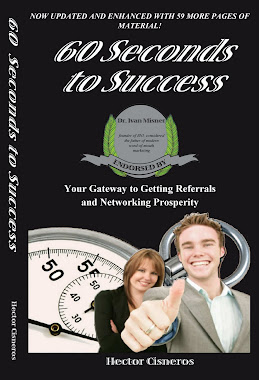
Get your copy of 60 Seconds to Success

This book is not about a get rich quick scheme, its about how to be successful 60 seconds at a time.

You will learn how to use powerful words that compel and motivate people to action. You will learn my methodology on how to construct your messages so that your referral partners will be able to repeat and pass your message on for you.

You will also learn how to keep your message fresh so that your listeners will be compelled to hear your message, even after hearing it many times.

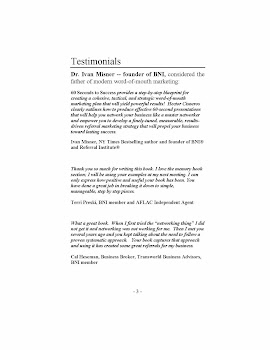
If this sounds interesting, read Dr. Ivan Misners testimonial. To check out the book, click on the link for the FREE pre-view copy.

Enjoy;

Mr. C.

My new Book

My new Book
60 Seconds to Success

Read the Testimonial
Read the Testimonial
Endorse by Dr. Ivan Misner and others